Labour has announced plans to terminate its power-sharing alliances with the Green Party in various local councils unless the Green councillors renounce a new policy statement, which identifies Zionism as a form of racism. This ultimatum impacts 19 councils where Labour collaborates with the Greens, either directly or in a coalition with other parties.
The tension arose after the Green Party of England and Wales adopted a motion during its recent conference declaring that Zionism promotes an "ethnonationalist Jewish state" responsible for the systematic disenfranchisement and destruction of Palestinians. The motion advocates for the establishment of a single democratic Palestinian state encompassing all of historic Palestine, which includes modern-day Israel. This stance has sparked considerable backlash, not only from Jewish organizations but also from various senior members within the Green Party, including four of its five Members of Parliament (MPs).
Labour's Response to Recent Policy Adoption
In response to the newly approved policy, Labour officials have mandated that local Green parties must provide confirmation within one week that they reject the Zionism policy in order to maintain their partnerships. Labour's chair, Bridget Phillipson, emphasized the need for local Labour representatives to issue a communication to their Green colleagues, insisting on a definitive repudiation of the policy.
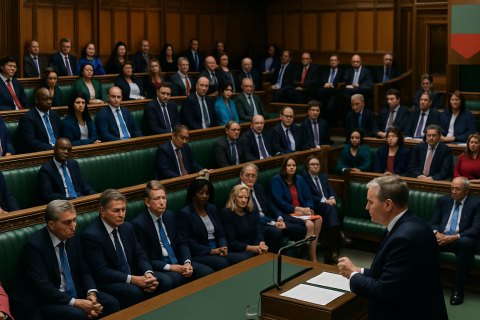
Prime Minister Andy Burnham reinforced Labour's position in a statement to Members of Parliament, declaring the party's unwillingness to engage in partnerships with the Greens under what he described as an "antisemitic" policy. However, there remains uncertainty about how these developments will affect existing local government collaborations.
Green Party's Position and Reactions
The Green Party leaders have criticized Labour's ultimatum, portraying it as an undue interference in local matters and asserting that it undermines democratic principles. Zack Polanski, the leader of the Green Party, who did not participate in the conference vote due to campaigning for a Westminster by-election, expressed a desire to revisit the controversial motion in the future. Despite his criticisms, he acknowledged the historical injustices faced by Palestinians, stating that their suffering is indicative of a racist ideology.
This disagreement illustrates ongoing tensions within the Green Party, as well as between the two parties. Some Green Party leaders have openly criticized the motion adopted during the conference. Labour's ultimatum not only challenges the internal dynamics of the Green Party but could also significantly alter the political landscape in various local councils where the two parties have been collaborating.
Historical Context of Coalitions
The nature of the local coalitions varies across councils. In places like Sheffield, Lewes, and Warwick, Labour currently shares governance with the Greens. In several other regions, Labour forms broader alliances that include additional political groups. Labour's central leadership retains a level of control over local groups, necessitating the approval of its National Executive Committee for any partnerships.
In contrast, the Green Party allows its local factions more autonomy in determining their affiliations and partnerships. As a result, local Green groups are encouraged to advocate for their party's leadership to reconsider the newly adopted policy. The ongoing developments suggest a significant realignment in the collaboration dynamic among these parties in the immediate future.