Extravagance in Architectural Expansion
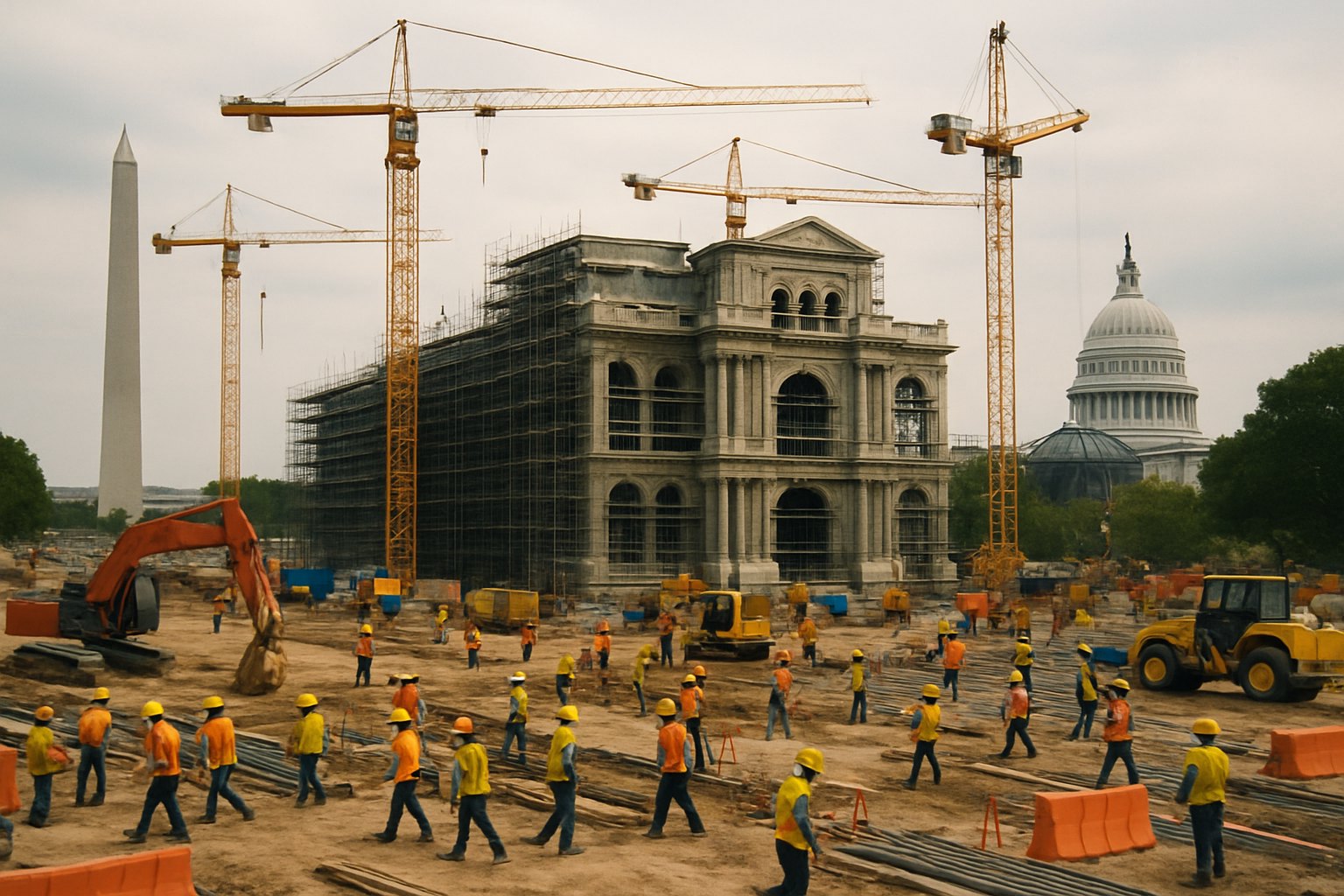
The tenure of Donald Trump as President has brought significant changes to the landscape of Washington, D.C., notably in the realm of architecture. While one might expect a developer-led administration to initiate some renovations and beautification projects, Trump's approach has been marked by over-the-top constructions and questionable aesthetic choices. From the bloated White House ballroom to a proposed monumental triumphal arch, Trump's architectural endeavors seem to mirror his personality — grandiose and extravagant.
With his proclivity for opulence, President Trump has sought to assert his vision on the city, resulting in what has been described as the 'Mar-a-Lagofication' of Washington. This phrase highlights the president's tendency to infuse his luxurious tastes into public spaces and historical landmarks, leading to modifications that some critics label as architectural atrocities.
One of the most notable projects is the expansion of the White House, specifically the construction of a lavish ballroom that stands as a testament to Trump's bravado. Initially intended to seat 650 guests at an estimated cost of $200 million funded through private donations, the ballroom's ambition has swelled. It now aims to accommodate 1,000 guests and has seen the price tag rise to a staggering $600 million, with a significant portion expected to come from taxpayer money.
Despite Trump's assurances that the new structure would not interfere with the existing White House, its scale has markedly dwarfed the historic building, causing some critics to liken it to an overly decorated wedding cake. Archival comparisons reveal that the enlarged ballroom reflects an unusual design ethos that might make the character of the classic White House feel lopsided in comparison. Critics are quick to point out that the design lacks cohesive integration, resulting in a chaotic composition of classical and modern elements.
The architect involved in the project, originally James McCrery II, ultimately expressed his discomfort with the increasingly grandiose plans, leading to Shalom Baranes stepping in. The new design has evolved into what is now referred to as the “Magnificent Ballroom and Military Complex,” with an emphasis on ensuring that it incorporates secure military facilities, including a six-story bunker integrated beneath it, which is designed to withstand nuclear threats.
Reconstruction Amidst Controversy
Alongside the ballroom, Trump has proposed a colossal triumphal arch that is intended to tower 250 feet above the Memorial Circle, located on Columbia Island in the Potomac River. This project has sparked immediate controversy, especially given its proclaimed purpose as a monument to honor Trump himself, celebrating his perceived legacy. Echoing ancient Roman and modern Parisian designs but supersizing them, the project reflects Trump's larger-than-life persona and desire for self-aggrandizement.
Initially, the arch was proposed in much more modest form. However, Trump took the idea and expanded it significantly, eventually commissioning Nashville-based Harrison Design for the project. The extravagant final design includes features such as a massive golden-winged Lady Liberty atop the arch, supplemented by other embellishments meant to amplify its grandeur. Critics have pointed out that even within Trump's circle, the design has come under scrutiny, with suggestions to tone down some elements deemed excessively ostentatious.
Legal challenges have arisen surrounding proposals for both the ballroom and triumphal arch. The National Park Service warned that the arch would adversely affect several historic sites in Washington, and lawsuits from various concerned citizens, including veterans, have emerged, contesting the appropriateness of such a dominant structure in close proximity to Arlington National Cemetery. Nevertheless, excavation-related work around the arch has commenced, indicating an accelerated timeline despite the pending legal issues.
The Impact of Architectural Ambition
The decisions surrounding these significant construction projects have unveiled deeper issues within Trump's administration, highlighting a pattern of prioritizing rapid development over historical preservation. There have been movements aimed at dismantling regulations that protect historic landmarks and landscapes, which has provoked it from preservationists across the nation. The administration’s proposed changes to the National Historic Preservation Act have drawn ire, as they would limit archaeological advocacy, public input, and community consultation, undermining longstanding safeguards for historic sites.
Brent Leggs, the president of the National Trust for Historic Preservation, has articulated concerns that these alterations represent a severe threat to the nation’s rich cultural heritage. Proponents of preservation believe that there is a striking irony in Trump’s rhetoric about expanding the legacy of monument-building while simultaneously eroding the very protections that would safeguard those monuments.
While the grandiose ballroom and arch capture public attention, there have been numerous other initiatives under the “Safe and Beautiful” directive, which has allocated substantial funding to various beautification projects in D.C. This includes millions spent on fountains and statues, as well as the controversial National Garden of American Heroes. The latter will feature numerous statues, some of historical figures whose legacies have recently undergone scrutiny in the context of contemporary societal values. The initiative aims to celebrate what Trump frames as American exceptionalism — but experts caution that the feasibility of such a project, given its scope and timeline, raises concerns about quality control and historical accuracy.
Criticism of Construction Quality and Management
The renovations and constructions that have been rushed under the administration often show signs of poor execution. A prime example is the ongoing issues surrounding the Lincoln Memorial reflecting pool, which has been drained multiple times due to botched renovation work that resulted in unsightly decay. The work, contracted out to a company known for swimming pool renovations, has been scrutinized for its execution quality and hasty completion.
Trump’s enthusiasm for construction has often overshadowed more pressing issues during his presidency, fueling speculation about the motivations behind his drive to develop and beautify government spaces. Insider accounts describe a frenetic atmosphere as Trump indulges in his passion for architecture and design, leaving behind significant policy implications. With more press conferences showcasing his construction projects, detractors allege that it detracts from governance and serious civic duty.
This obsession with aesthetics has led to further expenditures on various extravagant renovations. Allegations of prioritizing personal interests, including significant investments in decorative items and finishes for government spaces, hint at broader ethical concerns regarding the intertwining of personal wealth and public service. Observers note the troubling resemblance of this behavior to that exhibited by historical autocrats during their final days — delving into monumental constructions as a means of solidifying a legacy while neglecting the welfare of the public.
The Future of DC's Architectural Landscape
The ongoing whirlwind of construction projects initiated during Trump's presidency embodies both a personal legacy narrative and a broader rejection of norms in governance. As these ventures progress, key questions linger about the sustainability and integrity of Trump's additions to D.C.'s architectural lexicon. With the backlash against his policies, including the erosion of historic preservation regulations, the potential long-term impact could lead to hastily executed projects leaving irreversible changes to the character of the capital.
As discussions continue about what constitutes appropriate monuments and who should be memorialized, Trump’s aggressive approach toward constructing a distinctive architectural identity has left a polarizing mark on the city. The rift between those who value heritage and those eager for renewal reflects a larger national debate about identity, legacy, and what history means in contemporary society.
Ultimately, Trump's architectural ambitions present a troubling juxtaposition — a desire to craft a monumental legacy while disregarding the sensibilities tied to historical preservation. The strategy of construct-and-ignore may yield ephemeral glory for the administration but threatens to forsake the rich narrative of the nation's capital in favor of a gilded façade, raising important discussions about how future generations will perceive and interpret these additions.